

I. Introduction: The Rise of 3-layer Steel Pots Opens a New Track for Upgrading the Cookware Industry
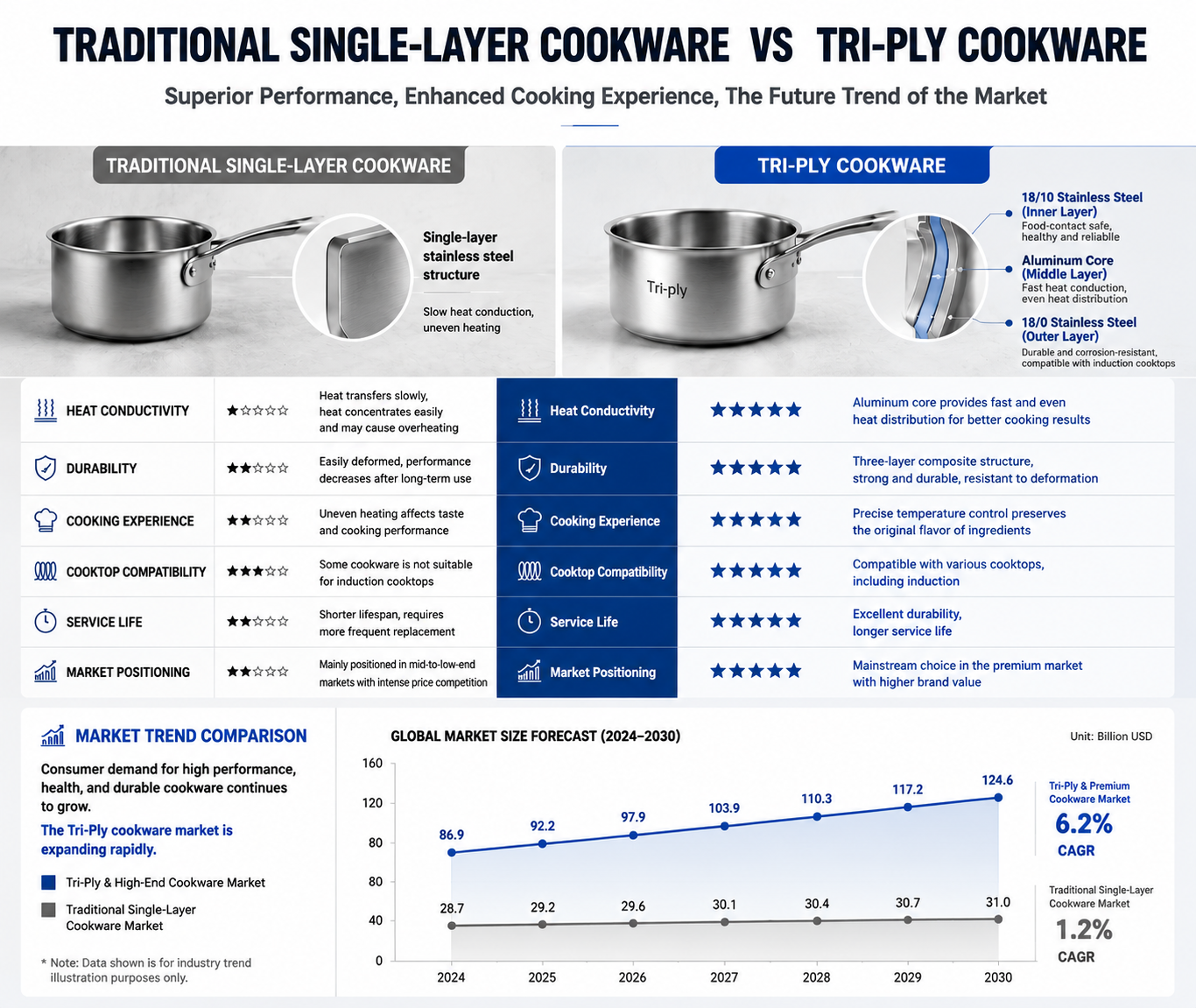
In recent years, 3-layer steel cookware has rapidly risen in the global cookware market, becoming a core growth driver in the industry, thanks to its core advantages of safety, health, superior performance, durability, and high-end quality. Affected by factors such as geopolitical conflicts driving up the prices of raw materials like stainless steel and aluminum, tightening trade protection policies in various countries, and declining global supply chain stability, the profit margins of ordinary single-layer cookware, which is often inexpensive and easily consumed, have been shrinking. Overseas customers and end consumers are more willing to pay for durable, stable, and high-end cookware. From high-end cookware brands and high-end supermarket channels in Europe and America to professional catering and commercial sectors, the market penetration rate of 3-layer steel cookware continues to climb, gradually replacing traditional single-layer cookware and becoming a mainstream choice under the trend of consumption upgrading.
Unlike traditional cookware, the 3-layer steel pot features a composite structure of 304 stainless steel, aluminum core, and 430 stainless steel , combining the core advantages of different metal materials to ensure efficient heat conduction, even heating, safety, and durability. Currently, consumer demand for healthy cooking, high-quality home furnishings, and durable products continues to rise, making the 3-layer steel pot a core growth driver in the high-end cookware market. This has opened up a new avenue for cookware manufacturers to avoid the cutthroat competition of low prices and increase product premiums. The complex and ever-changing global trade environment also simultaneously places higher demands on companies' production technology and intelligent manufacturing capabilities.
II. Core Advantages of the Market Boom: The 3-layer Steel Pot's Continued Popularity
Optimizes cooking performance to meet high-quality cooking needs:The 3-layer composite structure is the core advantage of the 3-layer steel pot. The middle aluminum core conducts heat rapidly and evenly, while the inner and outer double layers are made of food-grade stainless steel, ensuring safety, stability, corrosion resistance, and high-temperature resistance. This effectively solves the problems of traditional single-layer pots, such as slow heat conduction, uneven heating, easy burning, and unstable materials. With its rapid heating, even heating, and precise temperature control, the 3-layer steel pot significantly improves cooking efficiency and user experience, making it suitable for both refined home cooking and standardized commercial cooking scenarios. It is a mainstream choice for upgrading high-end cookware.
Durability has been comprehensively upgraded, aligning with the concept of high-end, long-lasting consumption:With the upgrading of consumption, consumers are paying more and more attention to product quality and long-term use value. Compared with traditional cookware, 3-layer steel pots are resistant to deformation, corrosion, and oxidation, and their appearance and texture remain stable over time. They are also compatible with all types of stoves, including gas stoves, induction cookers, and ceramic cooktops, making them more versatile. Thanks to their combined advantages of durability, versatility, and high quality, major global high-end cookware brands are focusing on developing 3-layer steel pot product lines, continuously driving market expansion.
III. Industry Pain Points: The Core Challenges to Large-Scale Production of 3-layer Steel Pots
Behind the surge in market demand is the fact that the production process of 3-layer steel pots is far more demanding than that of ordinary cookware. The traditional manual production model can no longer meet the market demand for high-end, standardized, and large-scale products, and the pain points in the industry's production are becoming increasingly prominent.
The molding precision requirements for multi-layer composite materials are stringent:3-layer steel pots are made of two different metal materials with significantly different material properties. During the stretching and forming process, problems such as uneven material flow, wall thickness deviation, dimensional deformation, and surface wrinkling are prone to occur. The production process requires precise control of material flow, product thickness consistency, pot body dimensional accuracy, and forming surface quality. The traditional manual production mode, which relies on experience, results in poor product consistency and low yield, making it difficult to meet the production needs of large-volume, standardized, high-end orders.
High surface treatment process standards, but insufficient stability in manual production:High-end 3-layer steel pots balance performance and aesthetics, and the market demands extremely high standards for surface finishes, requiring uniform and delicate sanding textures, consistent polishing effects, no processing defects, and a premium feel. However, traditional manual sanding operations heavily rely on skilled workers, resulting in inconsistent processing results, varying product quality, low production efficiency, high labor costs, and the loss of skilled workers impacting production capacity. These issues severely restrict order fulfillment and brand reputation enhancement for businesses.
IV. Key to Breaking the Mold: Automated and Intelligent Manufacturing, Empowering Enterprises to Achieve Scaled Development
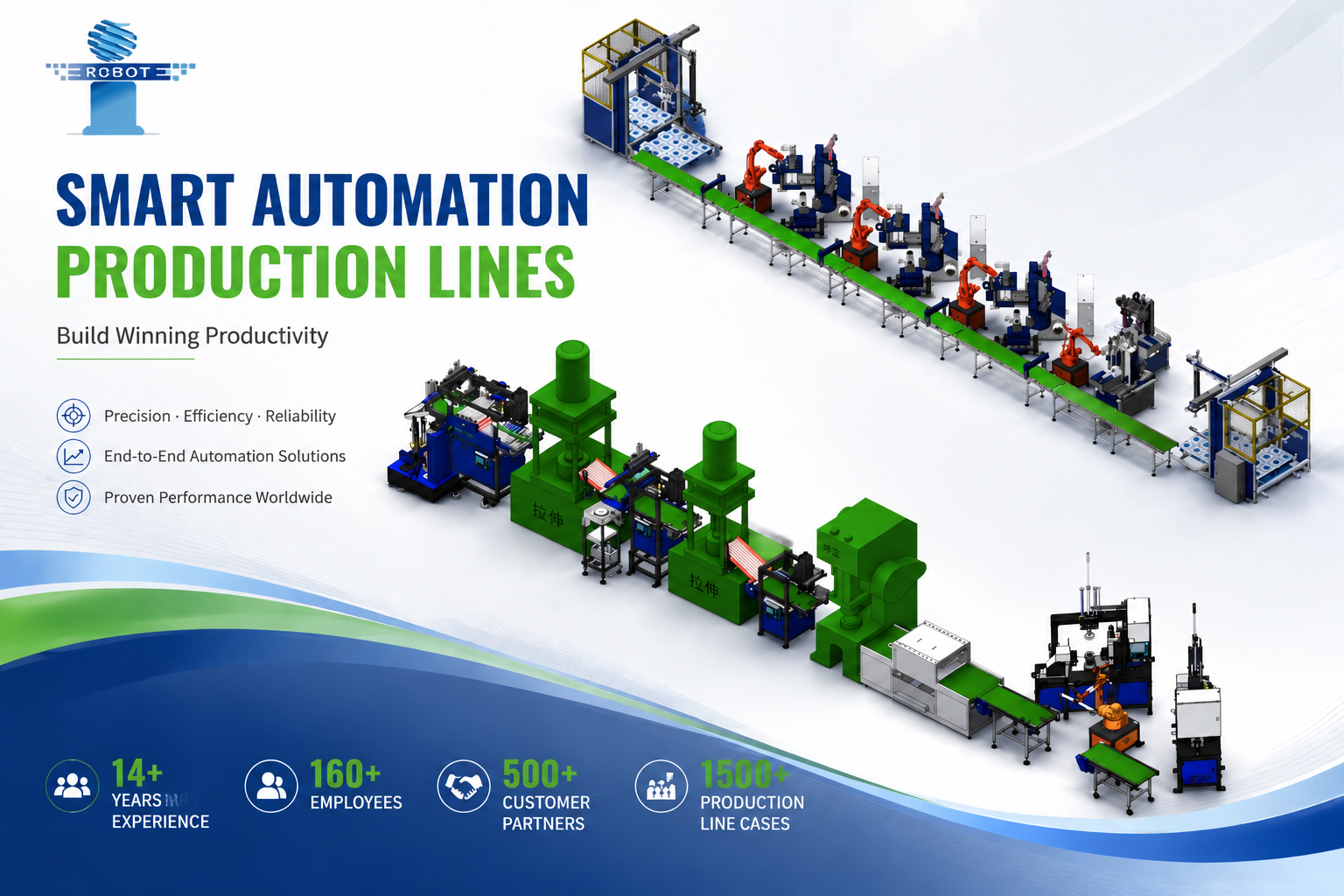
Faced with continuously growing market demand and the shortcomings of traditional production models, automated and intelligent production lines have become the core breakthrough for 3-layer steel pot manufacturers to reduce costs, increase efficiency, improve quality, expand production, and seize market share. A complete intelligent manufacturing production line for 3-layer steel pots can achieve fully automated operation: automatic feeding → stretching → shaping → edge cutting → cleaning → edge rolling → polishing & sanding → inspection → packaging, helping enterprises to fully upgrade from traditional manual manufacturing to digital intelligent manufacturing.
High-efficiency mass production, breaking through production capacity bottlenecks:Automated production lines can operate continuously and stably 24 hours a day, completely breaking the efficiency ceiling of manual production. The production cycle is standardized and stabilized, enabling the rapid acceptance of large-volume orders, significantly increasing enterprise capacity, shortening order delivery cycles, effectively alleviating delivery pressure, helping enterprises quickly seize market share, and enhancing their core competitiveness in the industry.
Precise quality control ensures standardized product quality:Intelligent automated equipment relies on servo precision control, PLC programmed management, and digital process parameter solidification to precisely control every step of the production process. It completely avoids human error, ensuring that all cookware products have uniform dimensions, stable molding, consistent surface finish, and standardized quality. It perfectly meets the stringent quality inspection standards of international high-end cookware brands, helping companies to cultivate the high-end market.
Reduce costs and burdens to enhance long-term profitability of enterprises:Currently, the global manufacturing industry is generally facing challenges such as rising labor costs, a shortage of skilled workers, and difficulties in personnel management. Automated production models can significantly reduce the number of front-line workers, lower labor costs, personnel management costs, and production risks associated with employee turnover, build a stable, efficient, and low-cost intelligent manufacturing system, and effectively improve the long-term return on investment and operational stability of enterprises.
V. Industry Future: 3-layer steel pots have a positive long-term outlook; intelligent manufacturing becomes the core of competitiveness.
The rise of 3-layer steel cookware is not a short-term trend, but an inevitable trend driven by consumption upgrades, product iterations, and environmental protection in the cookware industry. The market is expected to maintain steady growth in the future. Key driving factors include: continuously increasing consumer demand for high-quality and healthy cooking; widespread adoption of safe, environmentally friendly, and durable cookware; the continued prominence of the environmental and safety advantages of stainless steel; and the accelerated upgrading of global cookware brands to high-end products.
In the future, market competition in the 3-layer steel pot industry will no longer be a simple competition of price and orders, but a comprehensive competition of production efficiency, product quality, intelligent manufacturing capabilities, and rapid market response capabilities. Only by completing intelligent production upgrades can enterprises effectively reduce costs and increase efficiency, stabilize quality, flexibly adapt to market demands, and accurately seize the industry's growth dividends.
VI. Solution: IROBOT Automatic, assisting kitchenware companies in intelligent upgrades
IROBOT Automatic is deeply involved in the intelligent manufacturing field of the hardware and kitchenware industry, focusing on the research, design and implementation of automated production lines for 3-layer steel pots. Targeting the industry's production pain points, it creates professional and customized intelligent manufacturing solutions, which mainly cover automated forming production lines for 3-layer steel pots, automated sandblasting production lines, and integrated intelligent manufacturing solutions for the entire line.
By leveraging a deep integration model of "hardware equipment + software system + data empowerment" enterprises help traditional cookware manufacturers completely break free from the limitations of manual production, achieve digital and intelligent upgrades across the entire production process, effectively improve production efficiency, optimize product quality, and reduce overall manufacturing costs. This helps enterprises build modern intelligent factories and seize new development opportunities in the 3-layer steel pot industry.
Post time : 2026-07-27