

Polishing is a core process in the surface treatment of metal cookware , directly determining the product's appearance, texture, yield rate, and market competitiveness. Currently, most processing plants still use the traditional manual polishing method, but manual operation generally suffers from problems such as unstable quality, low production capacity, high labor costs, and significant safety hazards, making it unsuitable for modern standardized mass production needs.
With the upgrading of manufacturing automation, fully automated polishing production lines have become the mainstream solution for high-end surface treatment. This article compares the differences between automated production lines and manual operations from six dimensions: quality, efficiency, cost, safety, environmental protection, and flexible production, to help factories understand the inevitable trend of achieving automated polishing and quickly complete equipment upgrades and reduce costs and increase efficiency.
I. Consistent and stable quality, eliminating human error.
Manual polishing is highly dependent on the worker's experience, condition, and mood. The polishing force, speed, and positioning are inconsistent between different workers and at different times, which can easily lead to problems such as uneven polishing, residual burrs, messy textures, over-polishing, and missed polishing. This results in a high product defect rate and seriously affects the brand's reputation and the quality of the products shipped.
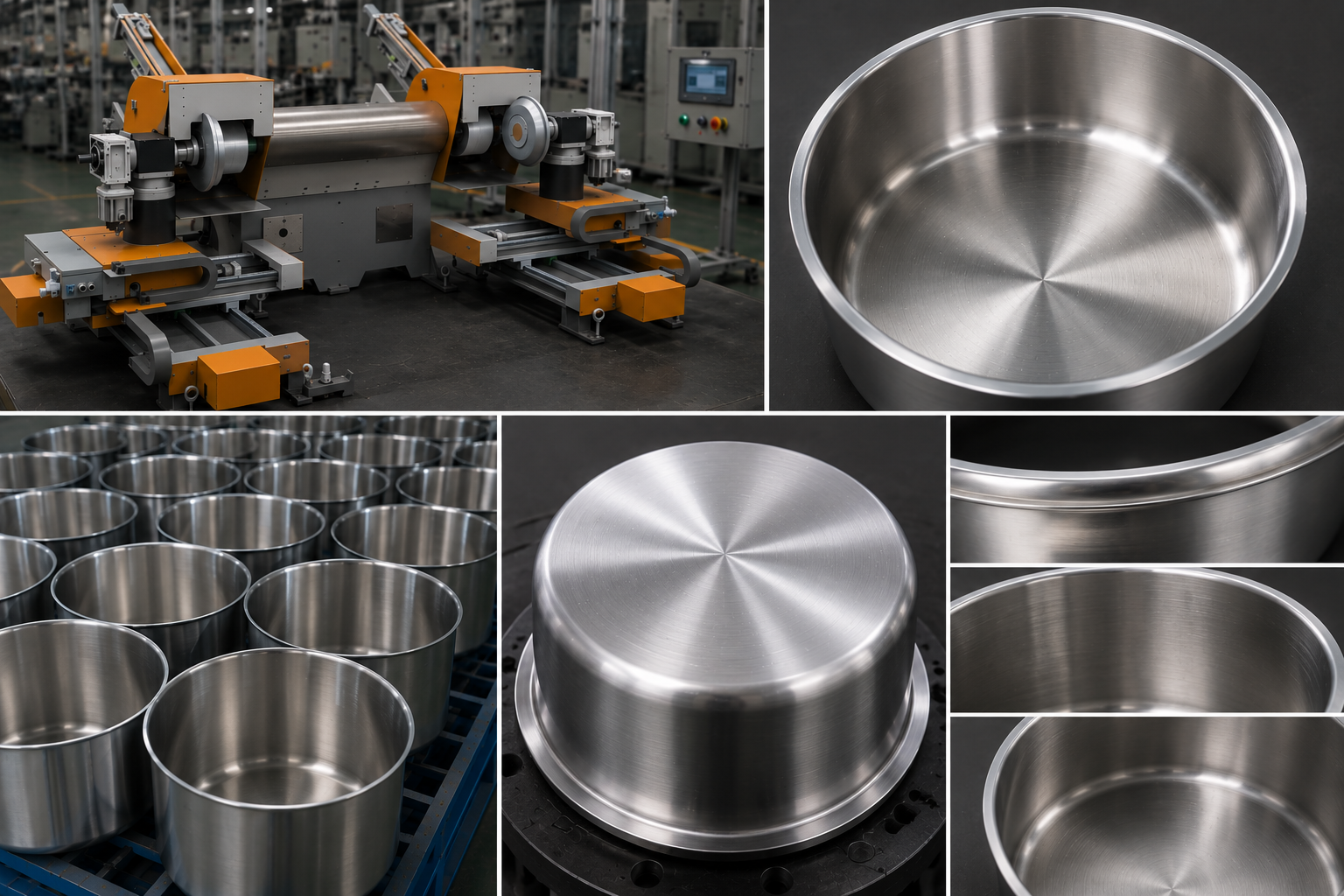
The automated polishing production line adopts servo precision control and PLC intelligent programming , with polishing pressure, speed, running trajectory, and polishing time all digitally fixed. After program debugging and saving, it can be reused for mass production with one click. The flatness, gloss, and polishing effect of each workpiece are highly consistent, and the degree of quality standardization is extremely high.
Meanwhile, the equipment can easily handle difficult-to-process areas such as inner cavities, grooves, and irregular curved surfaces, achieving 360° polishing without dead angles and significantly improving the product qualification rate.
II. Production capacity doubled, with 24-hour uninterrupted production.
polishing is a high-intensity, repetitive job that easily leads to worker fatigue, resulting in decreased speed and precision over time. Coupled with factors such as rest periods, shift changes, and leave, effective production capacity is extremely limited , making it impossible to support the delivery of large-volume orders.
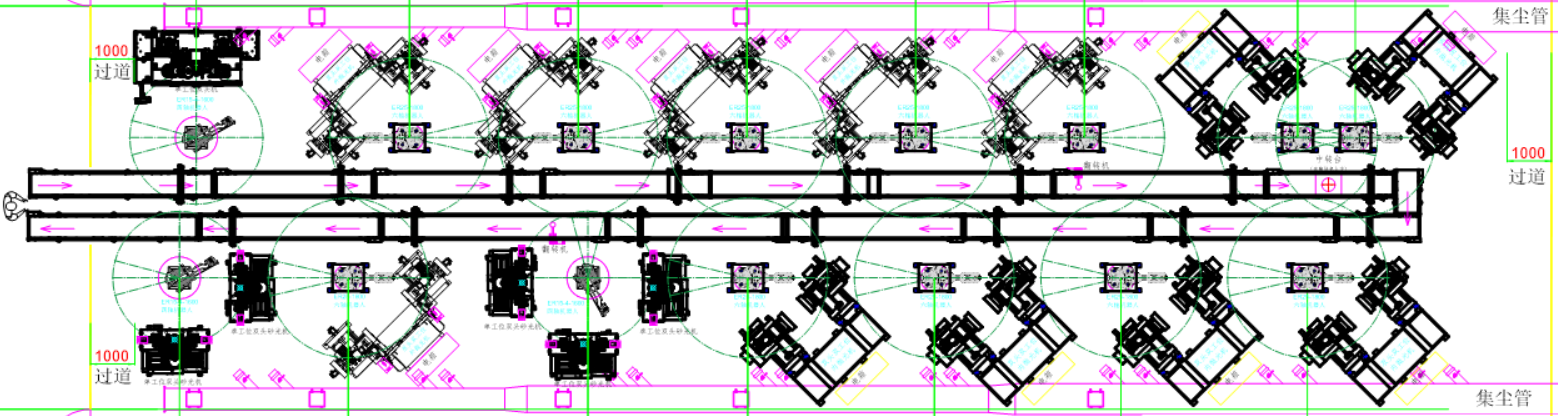
Automated production lines break through the limitations of human physical strength, with single-piece processing taking as little as 13 seconds. Combined with a multi-station alternating operation design, they can achieve continuous and stable mass production 24 hours a day, with no downtime or gaps , directly doubling efficiency .
An automated production line can replace 3-5 skilled polishing workers, completely solving problems such as insufficient manual capacity and order delays, and significantly improving the factory's order-taking capacity and delivery speed.
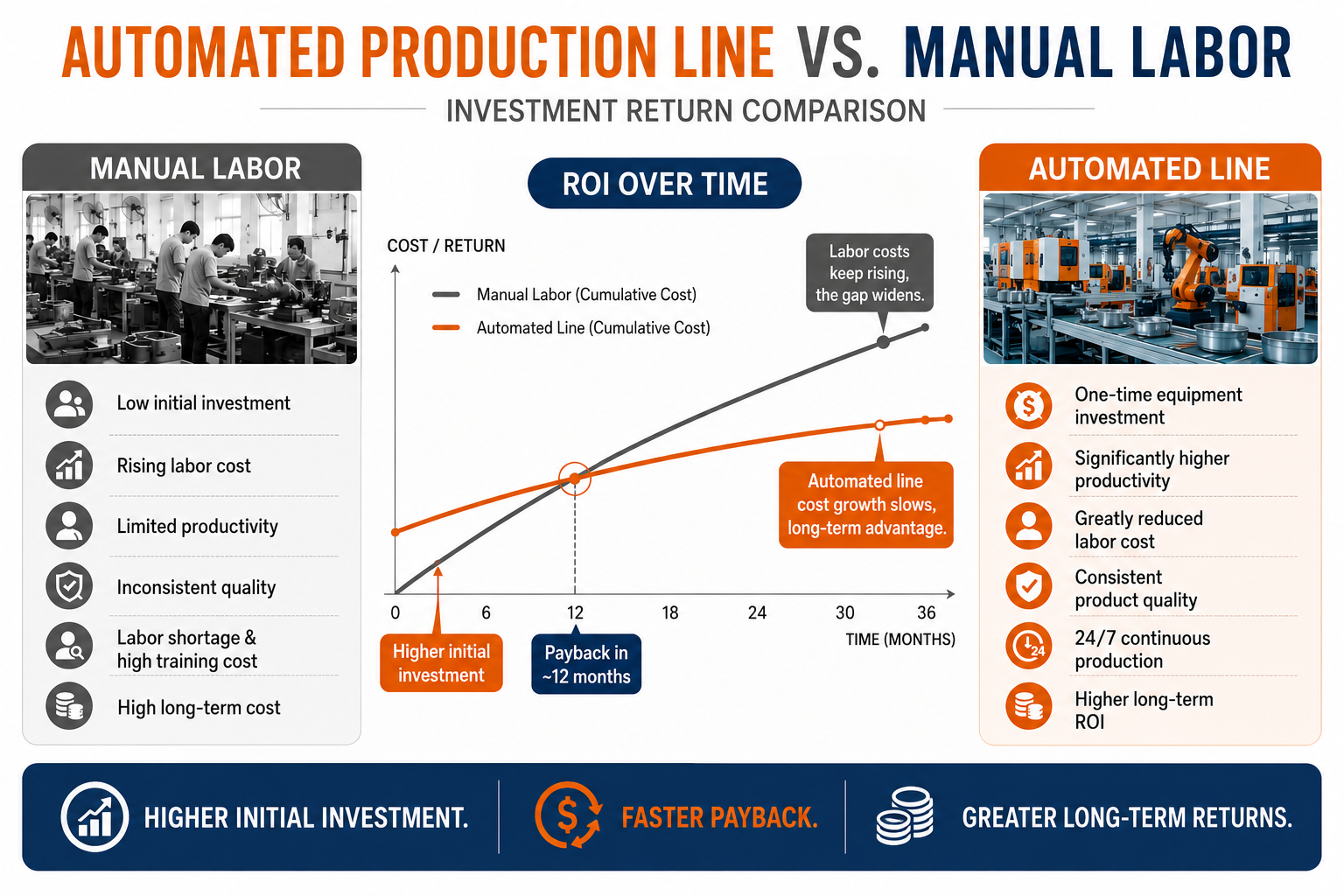
III. Significantly reduced operating costs and high long-term return on investment.
Currently, the industry faces difficulties in recruiting and retaining skilled polishing workers, with high annual salaries (salary + benefits + management costs) for experienced technicians remaining stubbornly high. Meanwhile, manual polishing results in a high defect rate, and rework and waste continuously increase the factory's hidden production costs.
The automated production line adopts a lightweight management model of one person operating multiple machines , requiring only one ordinary employee to complete loading, unloading, and inspection, greatly reducing labor costs. The equipment has a low failure rate, extremely low daily maintenance costs, and minimal operational pressure in the later stages.
The equipment investment payback period is about one year. Long-term operation can avoid various cost risks such as personnel turnover, technical differences, and defective product losses, and achieve refined cost control in the factory.
IV. Enhance workshop safety, mitigate occupational disease and work injury risks.
Manual polishing generates a large amount of dust and debris, and long-term work can easily lead to occupational respiratory diseases. At the same time, using handheld high-speed polishing tools can easily cause cuts, scratches, and other work-related injuries if the operator makes a mistake, posing a great safety hazard.
Automated production lines can adopt a fully enclosed polishing design , coupled with an integrated dust removal system, to effectively adsorb and filter production dust, ensuring a clean and compliant workshop environment that meets occupational health and safety standards. The entire process eliminates the need for manual contact with high-speed operating equipment, preventing operational safety accidents at their source.
It not only protects the health of employees, but also reduces the costs of factory work injury compensation and safety rectification, helping enterprises to build a standardized safety production system.
V. Green and environmentally compliant, meeting global export review standards.
With increasingly stringent environmental regulations both domestically and internationally, traditional manual polishing workshops are prone to unorganized dust emissions and low material utilization rates, making them highly susceptible to failing to meet environmental standards and impacting factory production qualifications and export orders.
The automated production line is equipped with a closed-loop abrasive recycling and dust removal system , which collects and treats dust in a unified manner, eliminates fugitive emissions, and increases the utilization rate of consumables, fully complying with domestic and international environmental protection production standards.
Standardized and environmentally friendly production environments can easily pass various foreign trade factory audits and qualification reviews, helping factories to secure high-end overseas orders.
VI. Highly flexible production capacity, adaptable to diverse customized orders.
Many factories mistakenly believe that automated equipment has poor versatility and can only produce a single product. The new generation of intelligent polishing production lines supports the storage of multiple process programs and can achieve multiple uses on a single line by changing different polishing wheels and product molds.
It can meet the needs of large-scale standardized mass production as well as small-batch custom orders. The process switching speed is far faster than manual debugging, which greatly improves the factory's market response speed and flexible production capacity.
In conclusion, automation is an inevitable trend in the field of metal cookware polishing.
Compared with traditional manual polishing, automated polishing production lines have comprehensive advantages in terms of quality stability, production efficiency, cost control, safety, environmental protection, and flexible production, precisely solving the core pain points of processing plants such as labor shortages, inconsistent quality, high costs, and high risks.
In the wave of industrial intelligent upgrading, the purely manual production model can no longer meet market competition. Replacing production lines with automated ones is a core measure for factories to reduce costs, increase efficiency, enhance product competitiveness, and seize the high-end market.
If you are troubled by the various drawbacks of manual polishing, our fully automated polishing production line will bring long-term and stable economic benefits and brand upgrading value to your factory.
Post time : 2026-07-24